Domestic and Family
Violence Educational Resources

We know that prevention starts with conversations. That’s why we’ve created Myths and Facts Cards – a practical, culturally sensitive tool to open up safe, meaningful discussions about Domestic and Family Violence with young people and adults.

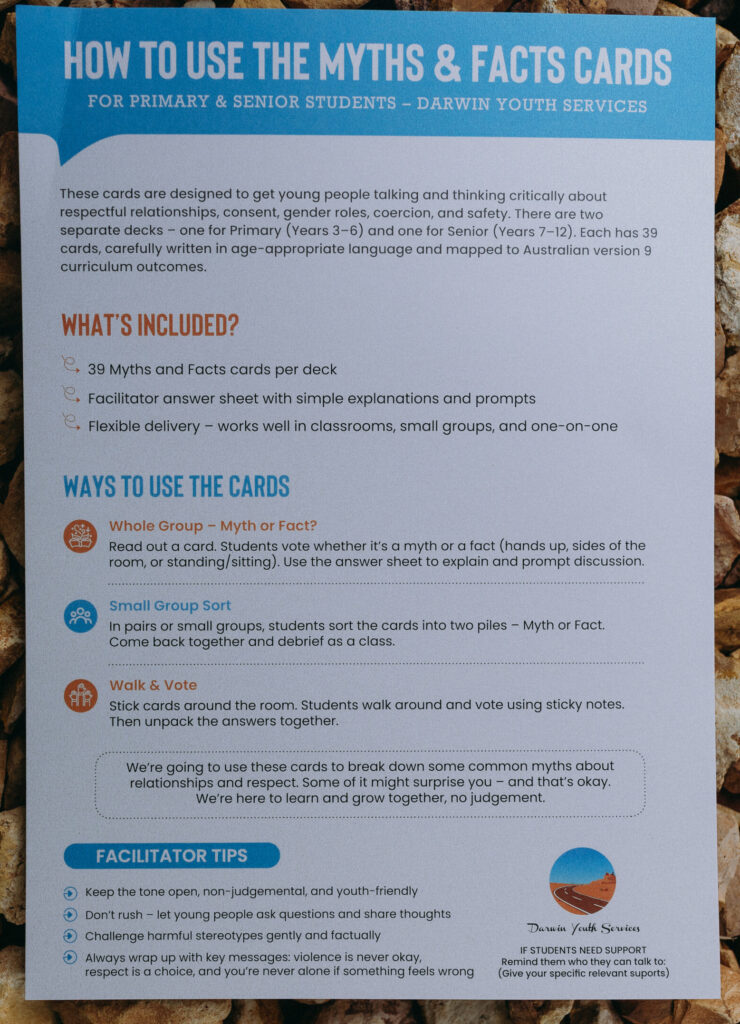
Each deck comes with 40 cards unpacking common myths and facts about DFV. They’re designed to challenge harmful beliefs, encourage respectful discussion, and help break down stigma in classrooms, youth programs, training, and community workshops. We have a primary card set for up to year 6. And them a secondary card set that we use with young people aged 12- 18. 

What makes them different?

  • Built with input from educators, frontline workers, and community voices
  • Aligned with NT Curriculum and DFV prevention frameworks
  • Already used by Team Health, SARC, child protection teams, and in 9 schools across the NT
  • Suitable for remote, urban, and cross-cultural settings, with some editions available in local Indigenous languages
You can use them in so many ways – as a warm-up, a reflection activity, a game, or a deeper group discussion. Perfect for sparking important conversations that matter.
 
If you’d like to see a sample deck or chat about how these could support your work, send us a message anytime. Let’s keep moving prevention forward, one conversation at a time. 

Myths & Facts

A practical, culturally responsive tool to support safe and meaningful conversations about Domestic and Family Violence with young people and adults. Our DFSV image based cards are a gentle age appropriate conversation tool designed for students in Year 1 to Year 5 and for learners with low literacy. The cards focus on everyday experiences that young people recognise such as friendships boundaries feelings social media and playing games online. Each card includes a clear image on one side to support understanding without relying on reading. On the back are simple guided prompts for teachers youth workers and facilitators to help explore safe and unsafe behaviour kindness respect consent and online safety in a way that feels calm and supportive. The visual approach allows students to point notice and describe what they see rather than having to explain complex ideas or personal experiences. This reduces pressure supports emotional safety and makes the resource accessible for a wide range of learning needs and classroom settings. These cards are well suited to early prevention education. They help children build emotional language recognise when something feels wrong understand personal and digital boundaries and learn when and how to seek help. The prompts support adults to guide conversations confidently while keeping discussions structured safe and developmentally appropriate.
$ 64
99
per order
  •  
Myth Cards
Myth Facts Cards

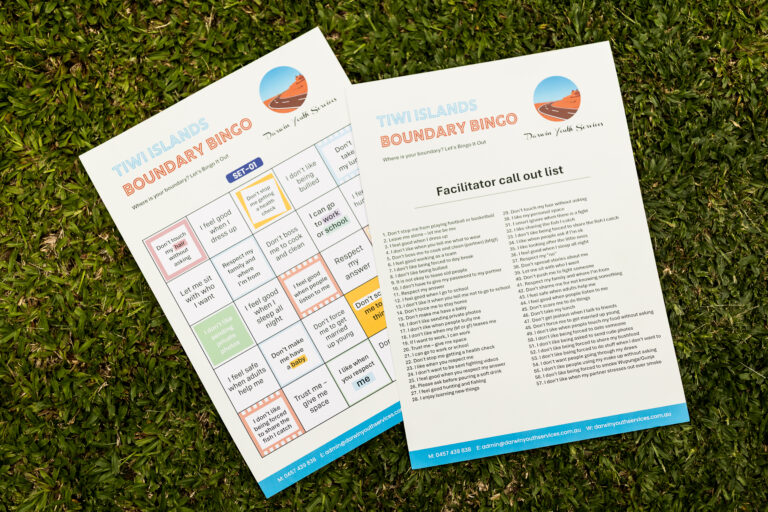
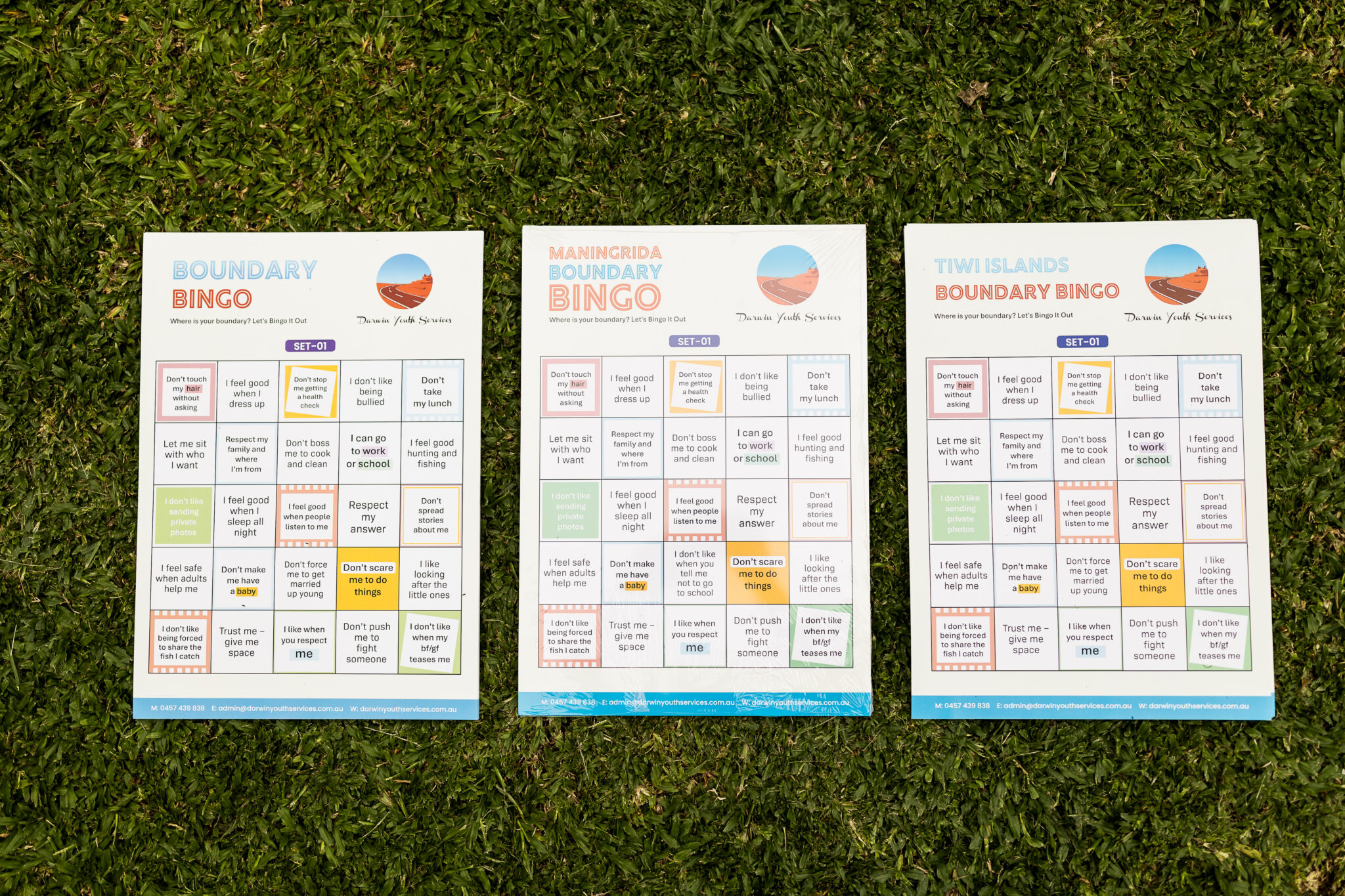
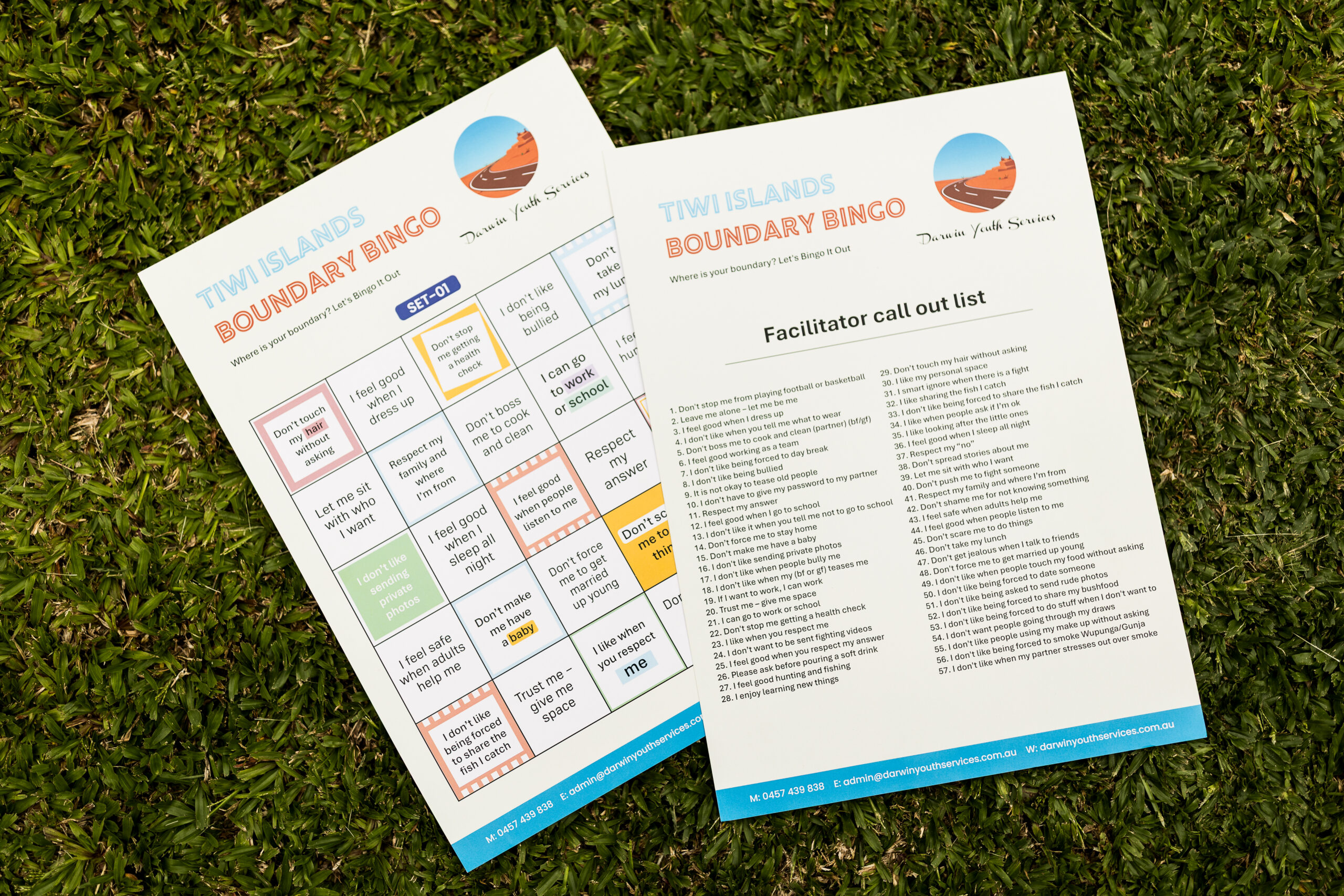
Boundary Bingo

Boundary Bingo is an interactive game based resource designed to help young people understand boundaries in real life situations. It supports conversations about consent personal space emotional limits digital boundaries and peer pressure in a way that feels safe engaging and age appropriate. Rather than telling young people what boundaries are this resource helps them recognise what boundaries feel like when they are respected crossed tested or ignored. It encourages discussion reflection and shared language without forcing disclosure or putting young people on the spot. Boundary Bingo works well in classrooms small groups youth programs and counselling settings. It is trauma informed strengths based and designed to meet young people where they are. Facilitators can easily adapt the game to suit different ages learning needs cultural contexts and group dynamics. This resource supports prevention education by building confidence emotional literacy and help seeking skills. It gives young people practical tools to notice red flags speak up early and respect both their own boundaries and the boundaries of others.
$ 74
99
  •  

Consent Puzzle

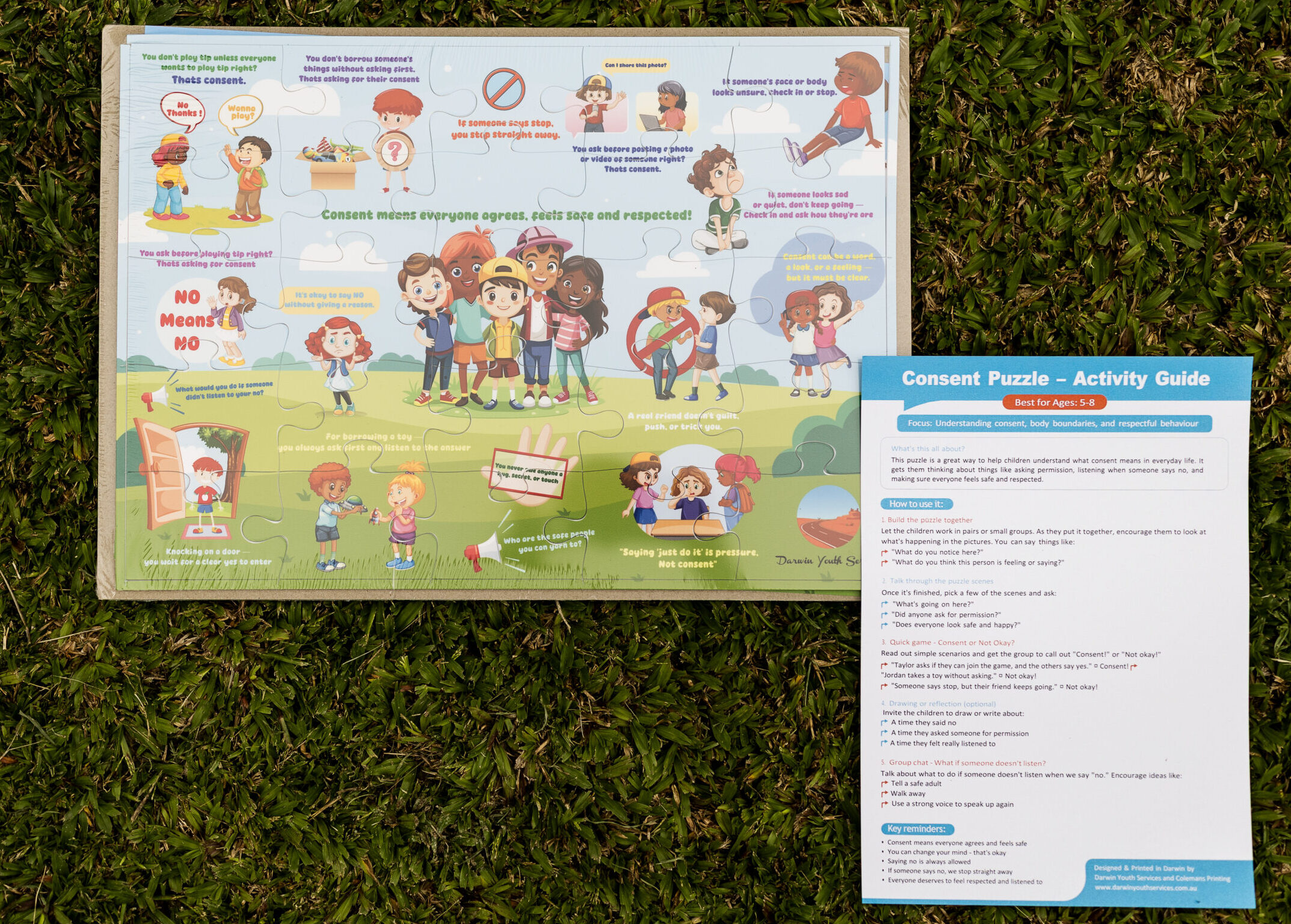
This resource is simple, practical, and powerful. The Consent Puzzle gives young people something concrete to work with while we unpack what consent actually means in real life. Contextualised, tried and tested in schools across both remote and urban settings, this tool helps educators and facilitators to step into conversations that can feel difficult or awkward, which often leads to avoidance. It breaks consent down into clear, everyday language. What does it look like to ask properly? What does a real yes sound like? What does a no look like? What happens when someone feels pressured? What changes when alcohol, power, stigma, or online social media is involved. As students piece it together, we also build understanding. It slows the conversation down, removes the awkwardness, gives young people language, and challenges assumptions. Consent is not just about sex. It is about respect, boundaries, autonomy, and choice in friendships, relationships, and digital spaces. Designed to support honest conversations, it guides young people through some of today's most challenging discussions in a fun and REAL way.
$ 64
99
  •  

DFSV Picture this cards

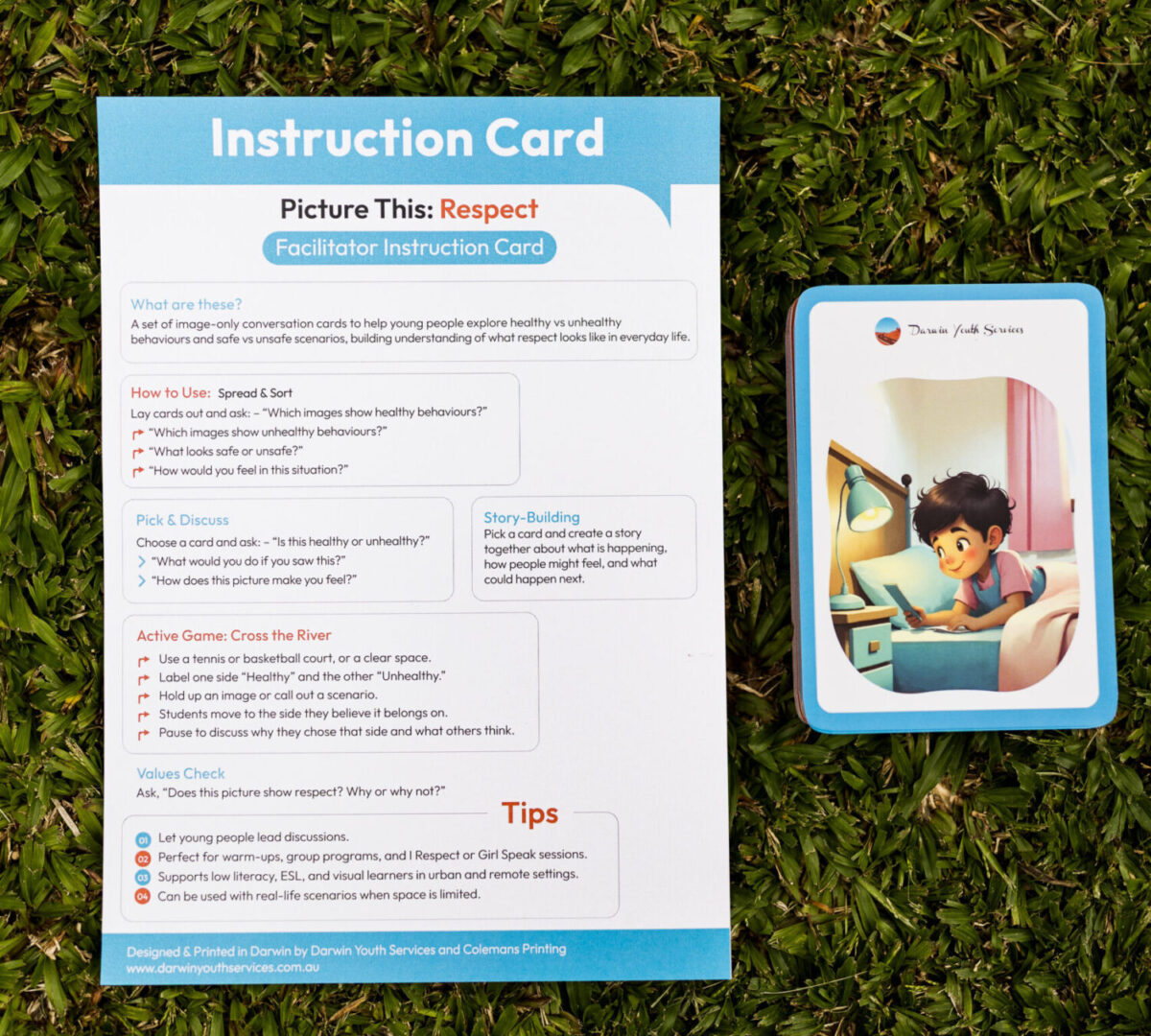
Our DFSV image based cards are a gentle age appropriate conversation tool designed for students in Year 1 to Year 5 and for learners with low literacy. The cards focus on everyday experiences that young people recognise such as friendships boundaries feelings social media and playing games online. Each card includes a clear image on one side to support understanding without relying on reading. On the back are simple guided prompts for teachers youth workers and facilitators to help explore safe and unsafe behaviour kindness respect consent and online safety in a way that feels calm and supportive. The visual approach allows students to point notice and describe what they see rather than having to explain complex ideas or personal experiences. This reduces pressure supports emotional safety and makes the resource accessible for a wide range of learning needs and classroom settings. These cards are well suited to early prevention education. They help children build emotional language recognise when something feels wrong understand personal and digital boundaries and learn when and how to seek help. The prompts support adults to guide conversations confidently while keeping discussions structured safe and developmentally appropriate.
$ 64
99
  •  

Jealousy Jenga

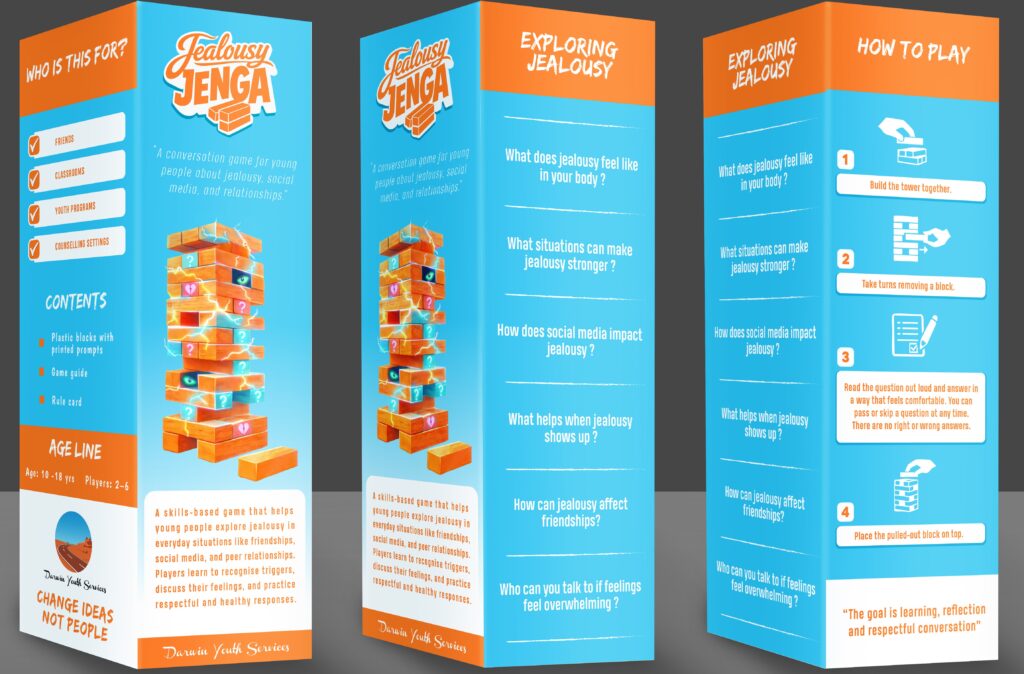
Our DFSV image based cards are a gentle age appropriate conversation tool designed for students in Year 1 to Year 5 and for learners with low literacy. The cards focus on everyday experiences that young people recognise such as friendships boundaries feelings social media and playing games online. Each card includes a clear image on one side to support understanding without relying on reading. On the back are simple guided prompts for teachers youth workers and facilitators to help explore safe and unsafe behaviour kindness respect consent and online safety in a way that feels calm and supportive. The visual approach allows students to point notice and describe what they see rather than having to explain complex ideas or personal experiences. This reduces pressure supports emotional safety and makes the resource accessible for a wide range of learning needs and classroom settings. These cards are well suited to early prevention education. They help children build emotional language recognise when something feels wrong understand personal and digital boundaries and learn when and how to seek help. The prompts support adults to guide conversations confidently while keeping discussions structured safe and developmentally appropriate.
$ 79
99
  •